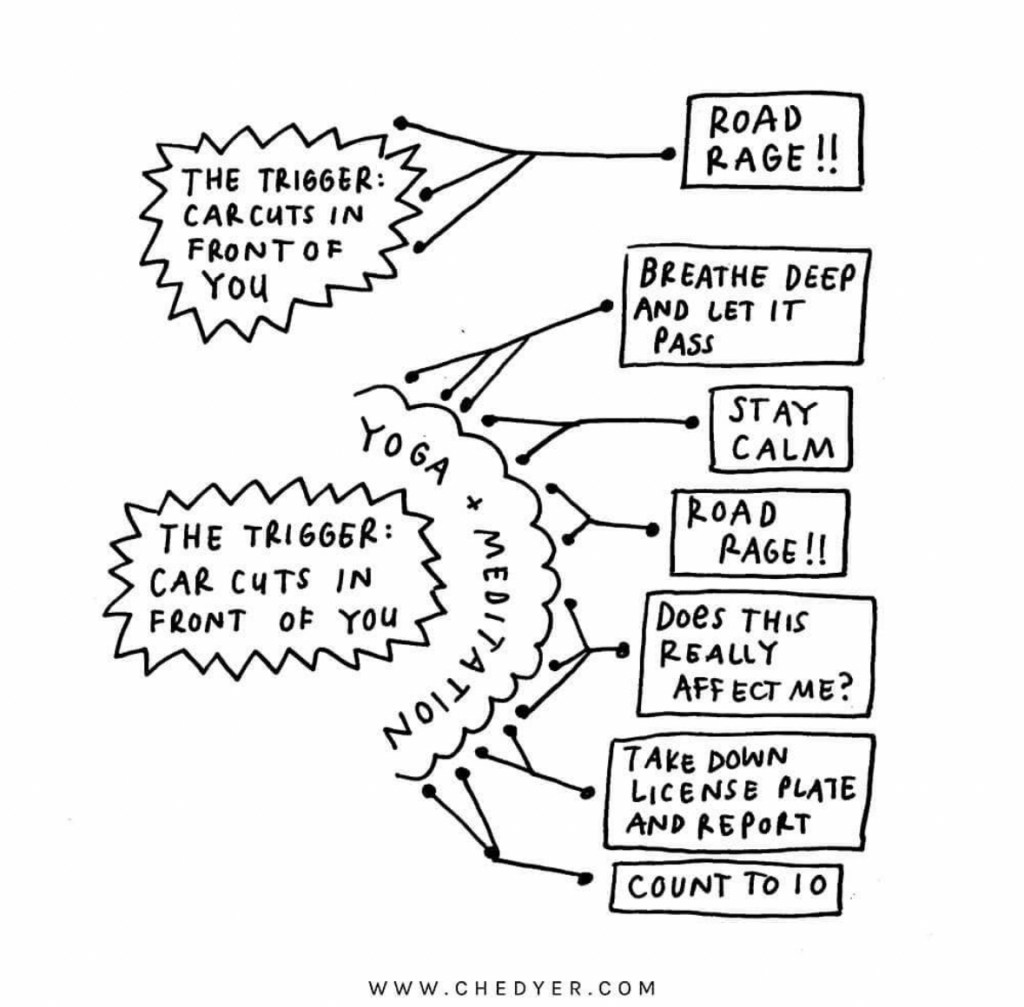
Let’s talk neuroplasticity and the science behind how meditation works. Repeated meditation sessions will re-wire your brain and help control impulsive reactions to everyday triggering events.
Meditation is a set of techniques intended to encourage a heightened state of awareness and focused attention. This consciousness changing practice brings about a wide number of benefits to our psychological well-being. When meditating, you’re learning to observe your thoughts without judgement and eventually you learn to better understand them as well.
The nerve cells in our brains form synapses or little gaps/ junctions between one another. Information and messages are passed through these nerve cells when chemical neurotransmitters are released into the synapse between the cells.
Neuroplasticity is the ability of the brain to reorganize itself and create new neural pathways and networks along which information can travel. The more you observe your thoughts, rather than being inside of your thoughts, you create a small gap between the thought and response to the thought. In this gap, we have space between the trigger and our usual response to reflect.
When we reflect and react differently, this creates a new neural pathway than the
one the brain/body was anticipating. Neuroplasticity and brain functioning assist in determining brain organization. When this choice is repeated, it creates an entirely new network of synapses in the brain. The brain gradually learns to adapt the physiology to meet the new actions and behaviors and the new neural pathways become solidified.
Studies have shown long-term meditators had better-preserved brains that non-meditators as they aged. “Your mind is your instrument. Learn to be its master, not its slave”. Other studies carried out at Yale University found that mindfulness meditation decreased activity in the default mode network (DMN) – the brain network responsible for mind-wandering and self-referential thoughts.
The DMN is on when our minds are wandering from thought to thought; mind wandering is typically associated with being less happy, ruminating and worrying about the past and future. Meditation has a quieting effect on the DMN and even when the mind starts to wander, new connections that have formed through meditation allow meditators to snap back out of “monkey mind”.
 pardipkaur.com